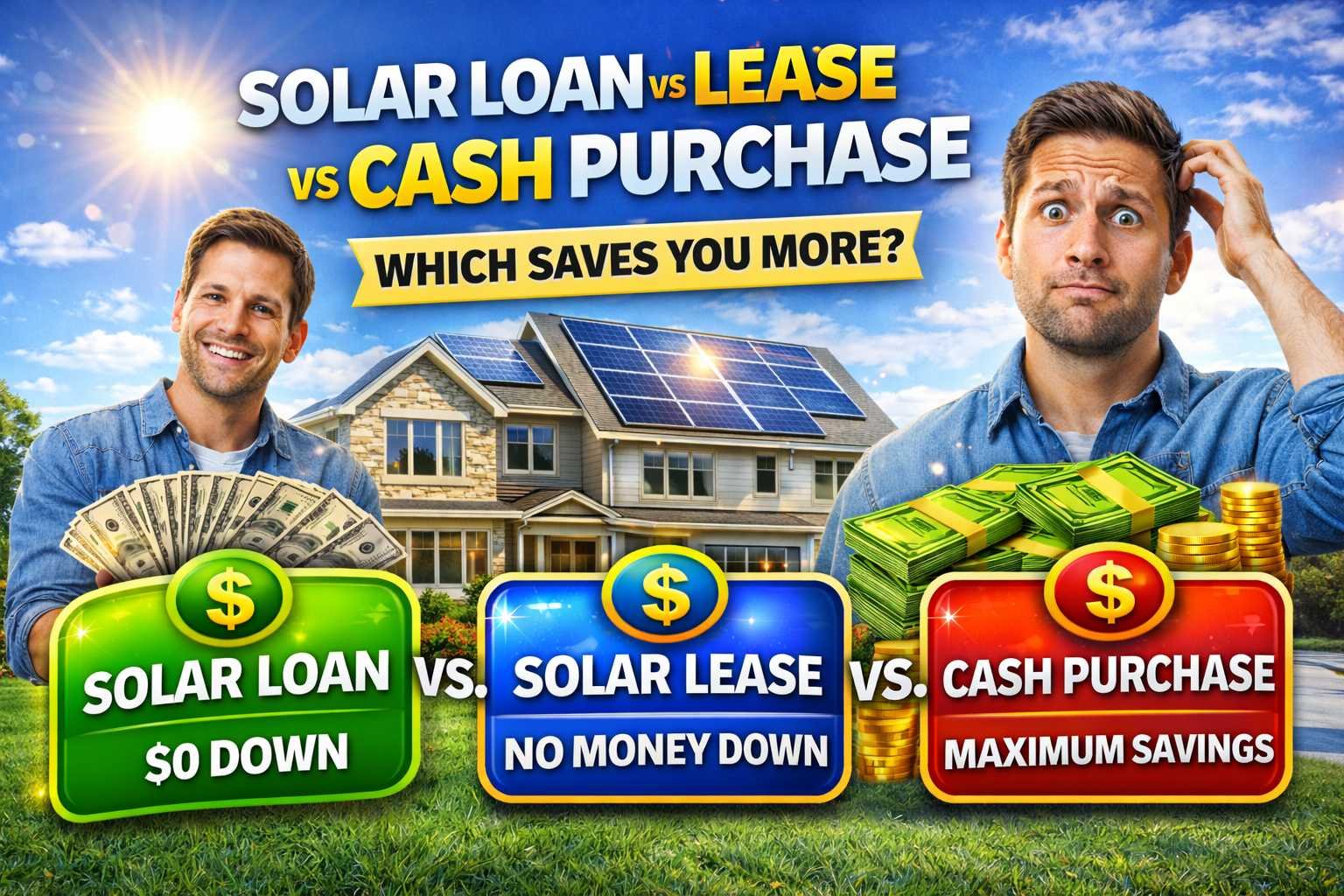
Choosing how to pay for solar panels is one of the most important financial decisions homeowners in the United States will make in 2026. With multiple options available — including solar loans, leases, and cash purchases — understanding the long-term impact on savings is critical.
This guide breaks down solar loan vs lease vs cash purchase, helping you choose the option that delivers the highest return on investment and lowest overall cost.
Why Your Solar Payment Option Matters
Most homeowners focus only on installation cost, but the payment method directly affects:
- Total lifetime savings
- Monthly cash flow
- Ownership benefits
- Tax incentives eligibility
The wrong choice can cost you thousands of dollars over time.
Overview of Solar Payment Options
There are three main ways to pay for solar panels in the USA:
Solar Loan
You finance the system and pay monthly installments while owning the system.
Solar Lease
A company owns the system, and you pay a fixed monthly fee.
Cash Purchase
You pay upfront and own the system بالكامل (fully).
Each option has pros and cons depending on your financial situation.
Solar Loan: The Most Popular Option in the USA
Solar loans are the fastest-growing financing option because they combine affordability with ownership.
Key Features:
- $0 down payment options available
- Fixed monthly payments
- Full ownership after loan repayment
- Eligible for federal tax credit
Pros:
- High long-term savings
- Tax incentives apply
- Increases home value
Cons:
- Interest payments over time
- Requires good credit score (650+)
Best For:
Homeowners who want ownership without paying upfront.
Solar Lease: Lowest Upfront Cost
A solar lease allows homeowners to install solar panels without owning them.
Key Features:
- No upfront cost
- Fixed monthly payments
- Maintenance included
Pros:
- Easy approval
- No maintenance responsibility
- Immediate savings
Cons:
- Lower long-term savings
- No tax credit benefits
- Long-term contract (20–25 years)
Best For:
Homeowners who want hassle-free solar with minimal upfront cost.
Cash Purchase: Maximum ROI Option
Paying cash upfront offers the highest financial return over time.
Key Features:
- Full ownership from day one
- No monthly payments
- Maximum eligibility for incentives
Pros:
- Highest lifetime savings
- Fastest payback period
- No interest costs
Cons:
- High upfront investment ($15,000–$30,000)
- Not accessible for all homeowners
Best For:
Homeowners with available capital looking for maximum ROI.
Solar Loan vs Lease vs Cash: Side-by-Side Comparison
Upfront Cost
Loan: Low or $0
Lease: $0
Cash: High
Ownership
Loan: Yes
Lease: No
Cash: Yes
Tax Credit Eligibility
Loan: Yes
Lease: No
Cash: Yes
Long-Term Savings
Loan: High
Lease: Medium
Cash: Maximum
Payback Period
Loan: 6–10 years
Lease: No ownership
Cash: 4–7 years
Which Option Saves the Most Money?
Cash Purchase delivers the highest savings because you avoid interest and maximize incentives.
Solar Loan comes second, offering strong savings with flexible payment options.
Solar Lease provides the lowest savings but requires minimal upfront cost.
👉 Final Verdict:
- Best Overall: Solar Loan
- Best ROI: Cash Purchase
- Best for No Money Down: Solar Lease
Real Savings Example (USA Homeowner)
Let’s compare a typical 6kW solar system:
Cash Purchase
- Cost: $18,000
- Tax Credit: $5,400
- Net Cost: $12,600
- Savings (25 years): $60,000+
Solar Loan
- Monthly Payment: $120–$180
- Total Savings: $30,000–$50,000
Solar Lease
- Monthly Payment: $80–$150
- Total Savings: $10,000–$25,000
Hidden Costs to Consider
Before choosing an option, watch out for:
- Dealer fees in solar loans (up to 20%)
- Lease escalator clauses (annual price increases)
- Maintenance or inverter replacement costs
- Early contract termination fees
Federal Tax Credit Impact
The 30% federal solar tax credit significantly affects your savings.
Only loan and cash purchase options qualify for this benefit, making them more attractive financially.
Pro Tips to Maximize Solar ROI
Choose ownership (loan or cash) for higher savings
Compare at least 3 solar quotes
Avoid leases with escalator rates
Check interest rates before financing
Install before peak summer for faster ROI
Is Solar Financing Worth It in 2026?
Yes, solar financing is one of the smartest financial decisions for US homeowners today.
With rising electricity costs and strong incentives, solar panels offer:
- Predictable energy costs
- Long-term savings
- Increased home value
- Energy independence
Conclusion
When comparing solar loan vs lease vs cash purchase, the best option depends on your financial goals.
If you want maximum savings, go with cash purchase.
If you want flexibility and ownership, choose a solar loan.
If you want zero upfront cost, a lease may work — but with lower returns.
The key is making an informed decision that aligns with your budget and long-term goals.