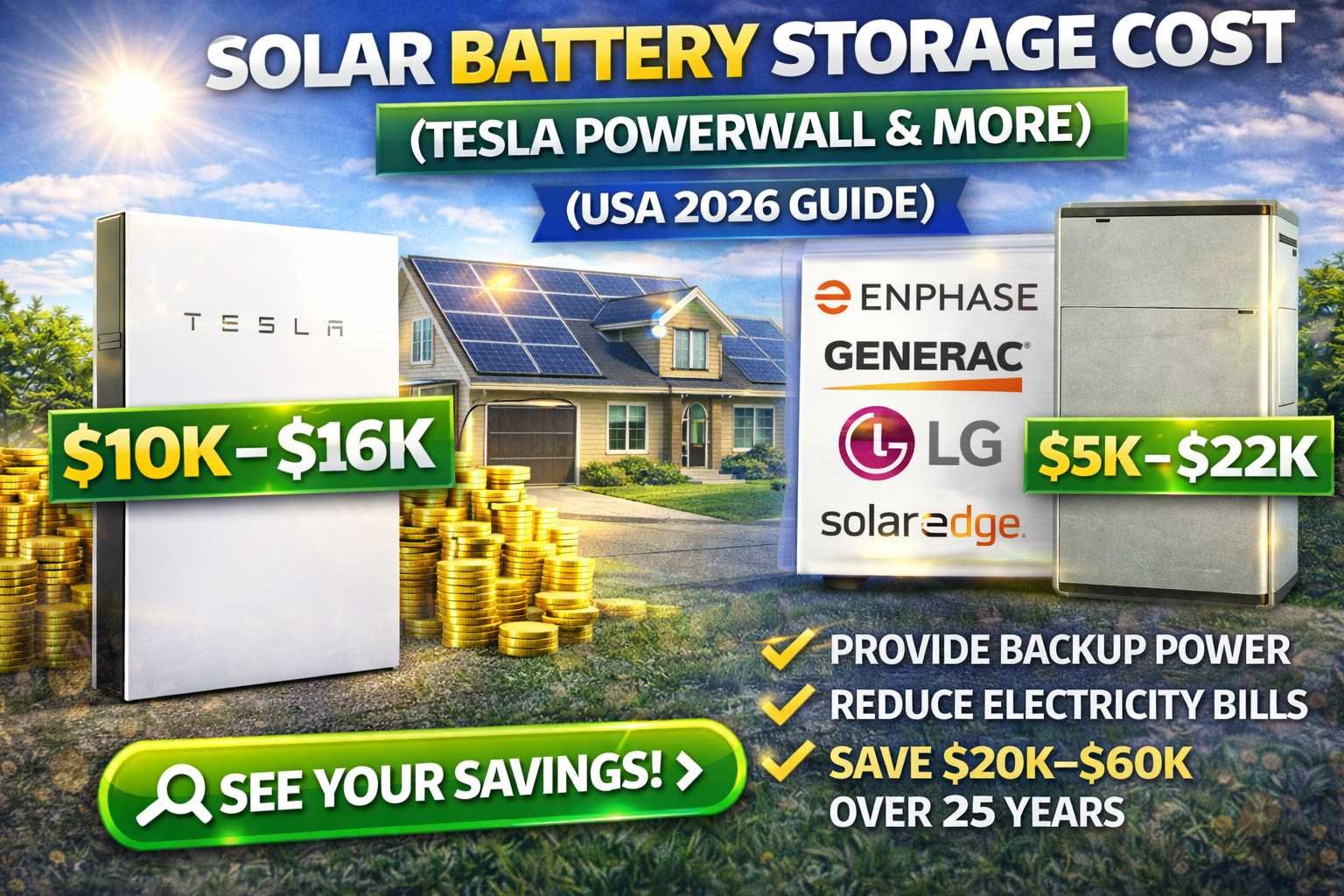
As solar adoption continues to grow in the United States, more homeowners are adding battery storage systems to maximize savings and energy independence. Understanding the solar battery storage cost in 2026 is essential before making this investment.
This guide covers everything — including Tesla Powerwall pricing, alternative battery options, ROI, and how much you can actually save.
What is Solar Battery Storage?
Solar battery storage allows homeowners to store excess energy generated by solar panels and use it later.
This helps you:
- Use solar energy at night
- Reduce reliance on the grid
- Protect against power outages
- Lower electricity bills
The most popular option in the USA is the Tesla Powerwall, but several alternatives are also available.
Tesla Powerwall Cost in the USA (2026)
The Tesla Powerwall is one of the most widely used home battery systems.
Average cost in 2026:
- Battery unit only: $8,000 to $11,000
- Fully installed cost: $12,500 to $16,500
- Premium installations: up to $18,000
Typical capacity:
- 13.5 kWh storage
👉 Key Insight:
Most homes require 1–2 batteries depending on energy usage.
Average Solar Battery Cost in the USA
Across all brands, battery storage pricing typically falls into these ranges:
- 5 kWh system: $5,000 – $7,000
- 10 kWh system: $9,000 – $13,000
- 13.5 kWh system: $12,000 – $16,000
- Large systems (20 kWh+): $16,000 – $22,000
👉 Average homeowner battery cost: around $15,000 before incentives
Popular Solar Battery Brands (USA)
Besides Tesla, other top battery brands include:
Enphase IQ Battery
- Modular system
- Best for small homes
Generac PWRcell
- Expandable capacity
- Ideal for whole-home backup
LG RESU Prime
- Reliable performance
- Compact design
SolarEdge Energy Bank
- Seamless integration with SolarEdge systems
👉 Each option varies in price, capacity, and scalability.
Factors That Affect Solar Battery Cost
Several factors impact your total investment:
Battery Capacity
Larger capacity = higher cost
Installation Complexity
Electrical upgrades increase price
Location
Labor and permit costs vary by state
Number of Batteries
More units = higher total cost but better backup
Brand & Technology
Premium brands cost more but offer better performance
Solar Battery ROI (Return on Investment)
Battery storage is more about energy independence and savings optimization than direct ROI.
Typical ROI timeline:
- 7 to 12 years
Savings depend on:
- Electricity rates
- Net metering policies
- Time-of-use pricing
👉 Homes in high-rate states (California, New York) benefit the most.
How Much Can You Save with Battery Storage?
Battery storage can:
- Reduce electricity bills by 50% to 80%
- Provide backup during outages
- Optimize solar usage
25-year savings estimate:
- $20,000 to $60,000 depending on usage
Solar Battery vs No Battery (Key Difference)
Without Battery
- Excess energy sent to grid
- Limited backup during outages
With Battery
- Store and use energy anytime
- Full or partial backup power
- Better control over electricity costs
👉 Batteries add flexibility and long-term value.
Are Solar Batteries Worth It in 2026?
Yes — especially if you:
- Live in areas with frequent power outages
- Have high electricity rates
- Use time-of-use billing
- Want energy independence
However, if your electricity rates are low and grid is stable, ROI may take longer.
Incentives for Solar Batteries (2026)
Even with policy changes, incentives still exist:
- State rebates
- Utility incentives
- Local programs
- Bundle discounts with solar installation
👉 These can reduce battery cost significantly.
Hidden Costs to Consider
Before installing a battery system, watch out for:
- Electrical panel upgrades
- Installation labor
- Maintenance or replacement after 10–15 years
- Additional backup circuits
Pro Tips to Save Money on Solar Batteries
Install battery with solar panels (cheaper combined cost)
Choose the right capacity (avoid overspending)
Compare multiple installers
Use available state incentives
Avoid unnecessary add-ons
Conclusion
Solar battery storage in the USA is becoming a powerful addition to solar systems in 2026.
While the upfront cost can range from $10,000 to $20,000+, the benefits include:
- Energy independence
- Backup power
- Long-term savings
- Better control over electricity usage
👉 The key takeaway:
Solar batteries are not just an expense — they are a strategic investment in energy security and future savings.